Louise Ells reviews Lásko by Catherine Cooper, Freehand Books 2023.
“What are the things that only you can use to say thank you to life?”
–Cooper, Lásko, page 156.

The new year brings with it goals, resolutions, and plans for self-reinvention both realistic and unrealistic. It’s a perfect time to read Cooper’s Lásko (Freehand Books, 2023), a novel in which Mája abandons her life (and fiancé) in Canada, and travels to the Czech Republic with the aim of redefining herself. Charmed by a Czech musician, Kuba, who claims to love her, Mája allows herself to be caught up in his world of spirituality and mysticism. Embracing life on the edge of mainstream society, she tries to mould herself into the person she imagines that Kuba believes her to be.
That plot summary is deceptively simple; the novel is very much a character-driven work written with such verisimilitude that without the subtitle ‘a novel’ on the cover it would be easy to assume it was a work of creative non-fiction. (Indeed, a minor character refers to Elizabeth Gilbert’s memoir Eat Pray Love so as to save the reader from making the obvious comparison.) Like Mája, the reader is introduced to a multitude of people in crowded settings. This could become confusing, but one of Cooper’s strengths as a writer is creating unique characters. I had the sense of having met many of the people in the story, and spending time with them, whilst not unpleasant, was at times stressful because I so deeply identified with Mája’s anxiety.
Mája’s mother’s disappearance, which appears to be important in the novel’s opening, loses significance early in the novel. Mája doesn’t go to the Czech Republic in search of roots, in order to better understand who she was, and could be. She is more intelligent than that, and knows that many of her questions are unanswerable. So the novel is not a mystery, but nor is it a love story in the traditional sense of the genre. Kuba is deeply flawed: egotistical, narcissistic, and seemingly incapable of telling the truth. He is gorgeous, sensual, interesting, and he and Mája are compatible in bed, and for a time that is enough. When the inevitable cracks appear in their relationship, Mája is forced to figure out what it is she really wants to accomplish in both the short and longer term. It was easy to escape her life in Canada, but she is not able to avoid the work she needs to do.

As a writer, Mája is well aware of the power of rhetoric. She knows she’s an unreliable narrator when it comes to her own life and alludes to this, often with humour. Conscious she’s telling herself stories about who she is and choosing to believe some which may or may not be entirely truthful, still she looks for verification, interpreting dreams and omens to validate her hopes. Metaphors abound, and Cooper so skilfully weaves them through the book that the reader starts to question signs along with the narrator. There are masks, in the form of skin conditions, concealer, and make up. There are literal and figurative journeys, darkness and light, and science fiction novels as difficult to untangle as real life.
Mája is also a reader. In the opening pages she despairs that it is too late to start over and turns to books, which she describes as, “The only thing left – the only thing that’s ever been left when there’s nothing else left . . .” (Lásko p. 26) Cooper thoughtfully includes a list of the books Mája reads, and all the songs mentioned through the course of the novel. It is clever of Cooper to place a character so attuned to words in a place where she doesn’t speak the language. Her sole Czech when she arrives in the country is a phrase her mother taught her: “Speaking is silver, silence is golden.” (p. 21)
There are many moments which are so subtle and swift that they demand a re-read in order to unpick exactly what has happened. A single sentence hints at an horrific incident in Mája’s past: “Years after she left, I discovered that I hated her [my mother], and I was haunted by the idea that she allowed those boys on the bus to do what they did while I left my body and flew out the window.” (p. 29) This moment reverberates when we learn that Mája’s grandmother “ . . . took my mother to work in a pub when my mother was fifteen, and she waited outside knowing my mother was having sex with men for money.” (p. 67)
When the offer of a shoulder rub from a stranger becomes an un-asked-for full-body massage, Mája thinks, “At that point, saying nothing became harder than saying no.” She escapes that situation, but the inability to communicate echoes through the rest of the book, as does the dichotomy of silence as both a form of power and a sign of weakness. Spoken, written, and assumed information is often misunderstood. Moments of clarity (“ . . . actually he’s just a guy, and we have so little in common.” (p. 93)) are obscured by Mája’s desire for her sacrifices to have been worth the effort. “Still, I agree to stay. How can I not? I want to know what happens next.” (p. 65)
There are multiple clues that Kuba is not as he first appears, starting with the novel’s title. Lásko, Kuba’s nickname for Mája (and other women) is Czech for love, affection, fondness, or beloved. It is, however, only a noun, and not, as in English, also the verb “to love.” It is a relief when Mája finally confronts Kuba: “For the whole time I’ve known you, I’ve been trying to make things okay that weren’t okay because I thought they were in my head. But they weren’t in my head, were they?” (p. 181) After a ceremony involving a hallucinogenic ayahuasca drink, Mája comes to the realisation that “ . . . maybe (she’s) not here to find out the truth about myself or my illness or my mother or anything else but to accept that I never will” (p. 219) and summons the courage to start letting go of beliefs, people, and choices that aren’t helpful.
Not mentioned, but implicit through the novel is Mary Oliver’s question, “What is it you plan to do with your one wild and precious life?” Perhaps the eighteen months the novel spans are, in fact, the planning stages for Mája. True to life, the novel leaves many questions unanswered, and a multitude of loose ends. Though there is no mistaking the potential for disaster, I chose to read the ending as positive. After writing and rewriting many versions of her life, Mája is ready to start living based on choices she makes.

Catherine Cooper is a Nova Scotian writer whose debut novel, White Elephant, was a finalist for the Amazon Canada First Novel Award. She’s also the author of Western Home, a collection of short stories.
Read a review of both books by Canadian Writers Abroad here.

photo: Bobbi Lane
Louise Ells has added the Czech Republic to the top of her travel wish list. The author of Notes Towards Recovery, a thematically-linked short story collection, she earned her PhD in Creative Writing from Anglia Ruskin University, and was a Hawthornden Fellow in 2017. Her novel, Lies I Told My Sister, is forthcoming from Latitude 46 Publishing in October 2024.
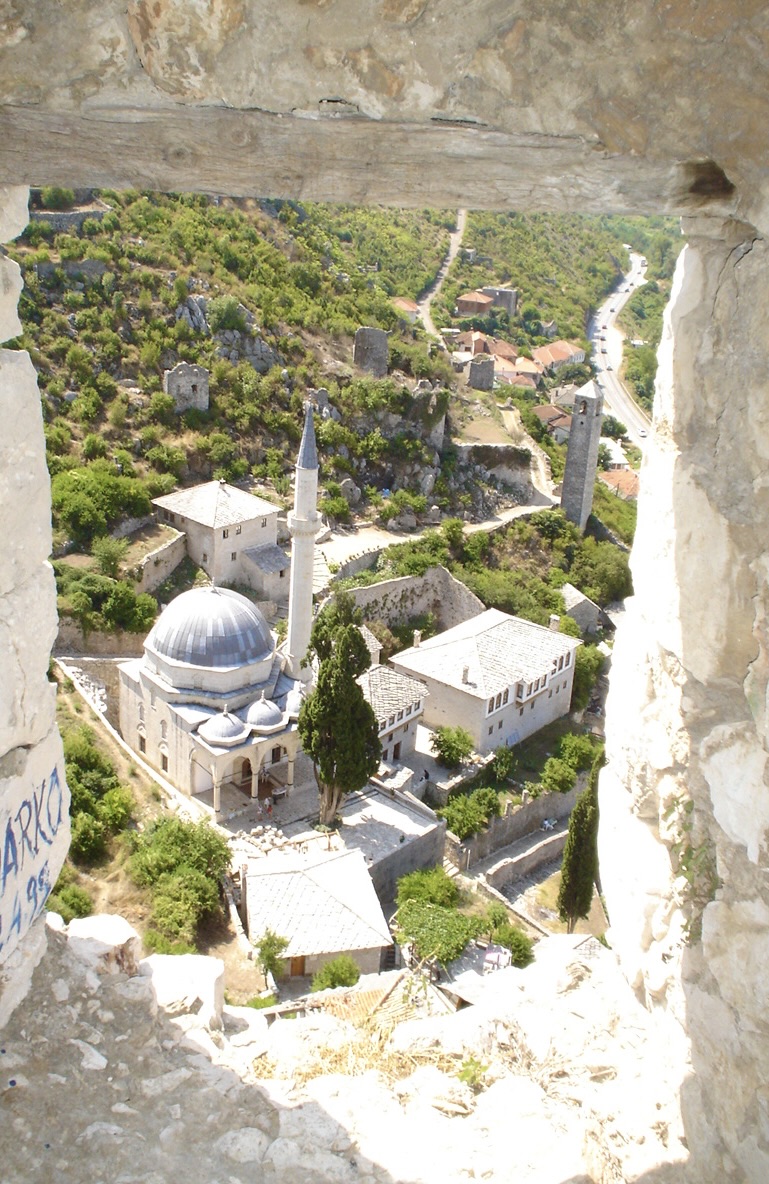
Header Photo: Gregorhudak, CC BY-SA 4.0 https://creativecommons.org/licenses/by-sa/4.0, via Wikimedia Commons.