
Batshit Seven, by Sheung-King
(pen name of Aaron Tang),
Prentice Hall Press, Penguin Random House, 2024.
Reviewed by Jane Christmas.
Once in a while (or more often than you’re aware!) you’ll be reading a novel, and suddenly the character from a television program or movie attaches him/herself to the main character of the book you’re reading. Annoying, right? And you can’t shake out the intruder character. Thus, during my reading, Roddy Ho, the skanky tech wizard in Slow Horses, rocks up and assumes the character of Glue (Glen Wu) the protagonist in Batshit Seven. Like Ho, Glue is a greasy, sweaty, slobby young man. You want to run him a bath. His hygiene and sexual habits are suspect, and his free time is spent masturbating, urinating in public; smoking weed, binge drinking, eating crappy fast food, playing video games, or sitting on the loo desperate for relief from his chronic constipation. Indeed, his very nature appears to be in a state of constipation. At 26, Glue is not a model of the male species, let alone of an Asian male.
When we meet Glue, he’s jerking off and jobless. Unlike his nickname, nothing sticks to him, or rather he doesn’t stick to anything. He’s been well educated at international schools in Hong Kong, and obtained in Canada the sought-after Western degrees that Asians covet on their CVs. But when he returns to Hong Kong, he can’t seem to hold down a job, and settles on the idea of training as an ESL teacher.
As much as Batshit Seven is about Glue and his aimless lifestyle and sketchy habits, it’s also about Hong Kong, about belonging, and about coping with the strange alienation one feels inside and outside one’s home country. Once you’ve swum in the expat pool, you no longer quite fit in to your home country or your adopted one; doomed to a kind of internal stateless limbo.
Glue’s own past, to him, feels foreign. He never questions his parents’ decision to enrol him in a random music school an hour and a half away from where he lived, which is good, because now, having lived in Canada for eight years and having then returned to Hong Kong, Glue finds that everything that was once familiar feels detached, which is also good. Becoming indifferent to the past—that is the mentality one needs to have in order to continue living in this post-colonial world. (p. 96)
It’s not unlike the limbo in which Hong Kong itself has existed since its handover to China in the late 1990s. The third biggest global financial powerhouse, home to the planet’s second largest number of billionaires, woke up one morning to find itself under communist rule. It sounds like a farce or a comedy. It’s anything but. Britain’s 99-year lease to control Hong Kong was set to expire and under the new terms China agreed to let the former British colony continue business as usual under a ‘one country, two systems’ principle, which China sees as serving the greater goal of its economic modernisation without sacrificing its socialist ethos. In other words, a totally hypocritical and mercenary approach as it reaps this lottery-like boon in its back pocket. God only knows what will happen in 2047 when China assumes full control. By then, Hong Kong will look like wrung out laundry. And what of the population? It’s been left to muddle on, some in a blissful state of denial; others weathering the trauma of having their culture and sense of nationhood watered into oblivion.

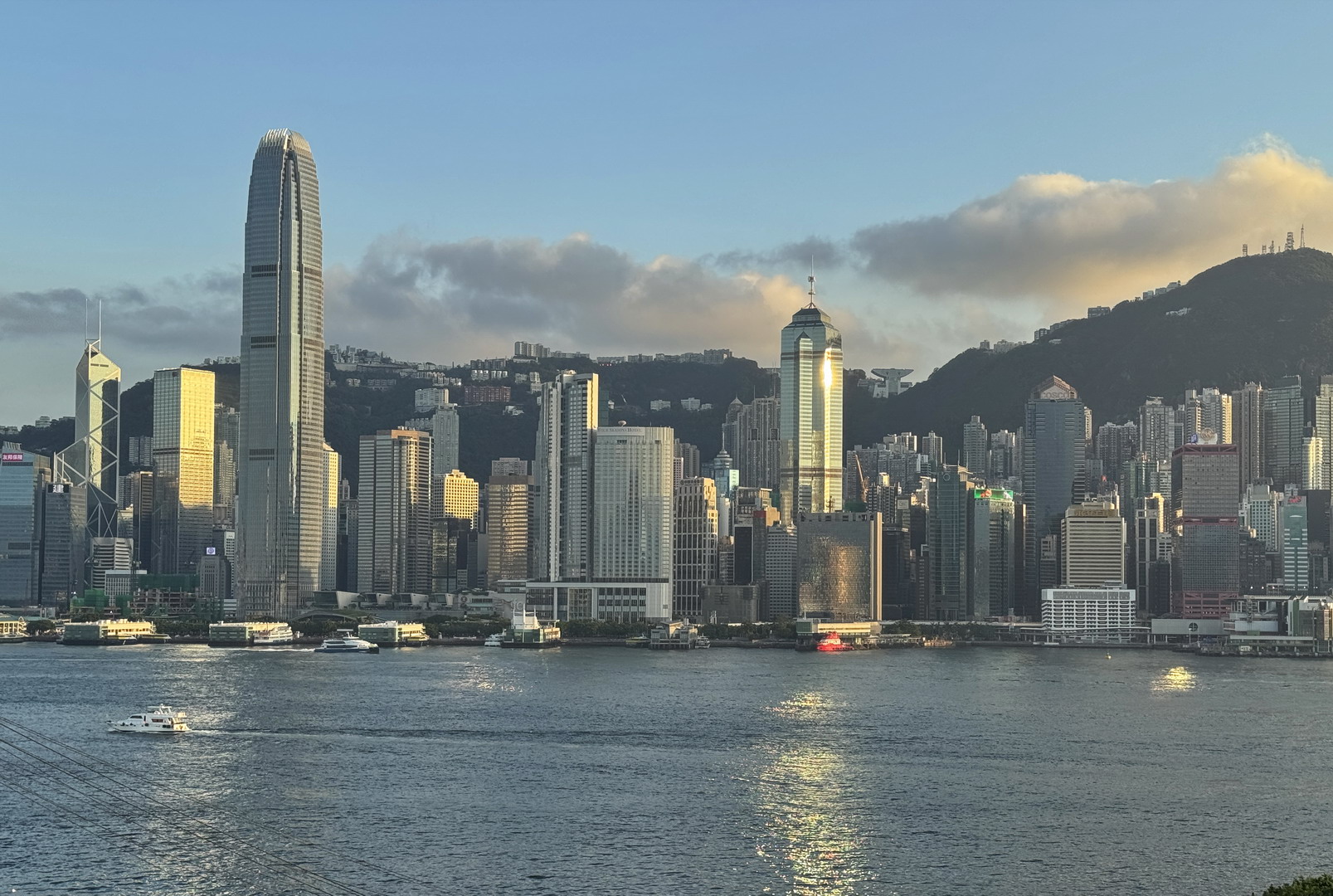
photo: Martin Riese
The young are collateral damage. Families are doing everything to get their kids educated and launched so that when the big handover happens in 2047, their children and their children’s children will have choices beyond the confines of Hong Kong. Imagine Canadian parents deciding to educate their kids abroad with the hope that their sons and daughters would not have to ever work or live in Canada. A bleak, dystopian strategy that messes with a kid’s sense of identity and belonging.
The sad, awkward political transition is mirrored in the latent growing pains of Glue, who was born in the wake of the handover. Twenty-five years later, he has no real sense of himself, paralysed into inaction. Like Hong Kong, he struggles with his identity. The women in the novel come across as elusive, strict, and controlling (do they represent China?) who emasculate the men. The novel is stacked with brands and cultural touchstones to underscore the materialism of Asian kids – if you can’t belong to your homeland then you can belong to the tribes of Givenchy, Nike, Kardasian, Blackpink, etc.
Batshit Seven delivers a worrisome insight into what’s happening in real time. Despite Asia’s historic separateness and isolationism, and its relatively newfound sense of pride, the East has a legacy of capitulating to the West to such an extent that Eastern children have been pushed into an abuse-like work/study ethic that prizes mastery of English over everything.
This is no isolated perspective. When my Korean daughter-in-law moved with my son to Korea during the pandemic, she admitted that it was struggle to readapt after ten years in Canada. Once back in her motherland, she pined for laid-back Canada, and vowed not to subject their young son to Korea’s hyper competitive education system where a child’s day — weekends included — is an unrelenting schedule of extra classes, private tutoring, and music lessons; where play time is for slackers.
“Hong Kong gears itself toward the white gaze. It’s better for business. We all know this. The reason there are red gates and dragon statues and large Chinese characters and red tiles for roofs in Chinatowns around the world is because we need to live in whiteness’s fantasies. … What are some of the other things we do to become closer to whiteness? Glue can think of a few. But the examples happened post 2019. The filmmaker Chloe Zhao will make a movie about white settlers “being nomadic,” which will win her an Oscar, and Andrew Yang will run for president on a campaign based on universal basic income (which Glue thinks will work) and self-Orientalizing, making jokes about being good at math because he’s Asian. The two, Zhao and Yang, will do what they need to do to succeed, appealing to whiteness. Some might say that all this is beautiful, that Hong Kong is a perfect example of East meeting West and that the culture of Hong Kong, so British and so Cantonese at once, is something rare and represents the post-colonial multiculturalism that is possible, where all are happy and coexist after colonization. But people with such beliefs neglect a simple fact: none of this is about collaboration. The British like the word “tolerance”: all that is not white is slowly becoming whiter. To think such things are beautiful, one must be white, or at the very least, getting closer to whiteness.” (p.72)
The novel also augurs a serious social issue, and perhaps goes some way to explain why and how the mad rush to amass whiteness-adjacent credentials is producing generations of socially anxious and constipated people who have been programmed to pimp themselves to another culture for better job prospects. The result? A displacement of identity and behaviour. How does one begin to wrest that back? If you don’t truly fit in then who are you? An expat works hard to assimilate into an adopted culture, unaware that they are detaching from their native one to the point of alienation. On the other hand, there’s socio-cultural cachet to being able to function like a native in multiple cultures.

That Sheung-King (alias of Vancouver-born, Hong Kong-raised Aaron Tang) is an author and educator accounts for the novel’s occasional but fascinating digressions on decentralized currencies, the non-state of Zomia, and the 1970 hijacking by Japanese students.
When Glue ponders the bigger issues of his life—and these digressions help give the book its edge—it makes the reader wonder at the manufactured reality of it all, of who we are or who we would be if we belonged nowhere.
What, Glue now wonders, was he trying so frantically to defend since he returned from Canada? Absolutely nothing. Nil. This might be a terrifying reckoning, but Glue, through the windshield of the Italian sports car, watching the polluted sky absorb the light from Shenzhen’s skyscrapers, in this comfort, which is peace, remains calm as ever. Everything is okay. Maybe Glue knew this all along. In fact, everything is going according to plan. Algorithms control the future controls the present. Glue is simply fulfilling prophecy. Po-Wing was right. Glue is a privileged chink who attended an international school—the most elitist, most bureaucratic, most colonial of all institutions—and to top it off, he received Western post-secondary education, without governmental support. He dropped out of graduate school, which was good because he drifted back to where he is supposed to be—here, teaching English to those who aspire to assimilate. The cause is the consequence. Three years before the handover, he was born. This was called British Hong Kong. His entire raison d’etre, from the moment of his birth, has been colonized. He cannot even type in traditional Chinese without using the romanized input method—Pinyin. This is great. … Now, twenty-six years later, what is there left for him to do but to accept his role in society? He is part of the orchestra. He is an ESL instructor for Englishmentation. In his next stage of life, Glue won’t need to prepare for classes. All he needs to do, from now on, is simply turn off his mind. … All of this is what Glue was meant to do. (p. 213)
I’d hoped this book would end with Glue having some kind of breakthrough; instead, it ends on a note of stasis. That’s limbo for you. Glue and his generation and successive generations will forever be between worlds, balancing competing ideologies between West and East, and becoming paralysed with indecision as to which camp to surrender to as they sit on the loo awaiting some glorious shit. Then again, maybe the answer isn’t so easy: When it comes to identity, you surrender to all, or to nothing.

Sheung-King/Aaron Tang was born in Vancouver and grew up in Hong Kong. He taught creative writing at the University of Guelph, where he received his MFA in creative writing. He now divides his time between Hong Kong and Canada. His debut novel, You Are Eating an Orange. You Are Naked (Book*hug Press, 2020), was a finalist for the 2021 Governor General’s Award and the 2021 Amazon Canada First Novel Award, longlisted for CBC’s Canada Reads 2021, and named one of the best book debuts of 2020 by The Globe and Mail.
Batshit Seven, winner of the 2024 Writers’ Trust Atwood Gibson Fiction Prize, is his second novel.
Further
- Sheung-King.
- Sheung-King, Penguin Random House.
- Book*hug Press for preview and where to buy You Are Eating An Orange. You are Naked.
- “Four of the best book debuts of 2020,” by Jade Colbert, The Globe and Mail (December 2020).
- Jen Rawlinson reviews You Are Eating An Orange. You are Naked., for the Hamilton Review of Books (Fall 2020).
- The Hamilton Review of Books stopped publishing at the end of 2025, but they got this interview out in January 2025: “Navigating the Edges of Hong Kong: Q&A with Sheung-King” by Brianna Wodabek.
- In November 2024, Sheung-King talked about Batshit Seven on “The Next Chapter,” CBC Radio.

Jane Christmas is the author of several memoirs, including And Then There Were Nuns, and What the Psychic Told the Pilgrim. She is also the author, under her alias Elizabeth Braithwaite, of the historical novel, A Flight of Saints. Read her interview here: “Of Angels, Nuns, and Pilgrims.”
Header photo of Victoria Harbour, Hong Kong by Martin Riese. More at Zone A Gallery.