
Cupid and the Silent Goddess
by Alan Fisk. Page d’Or reprint 2022
Reviewed by Mark Frutkin
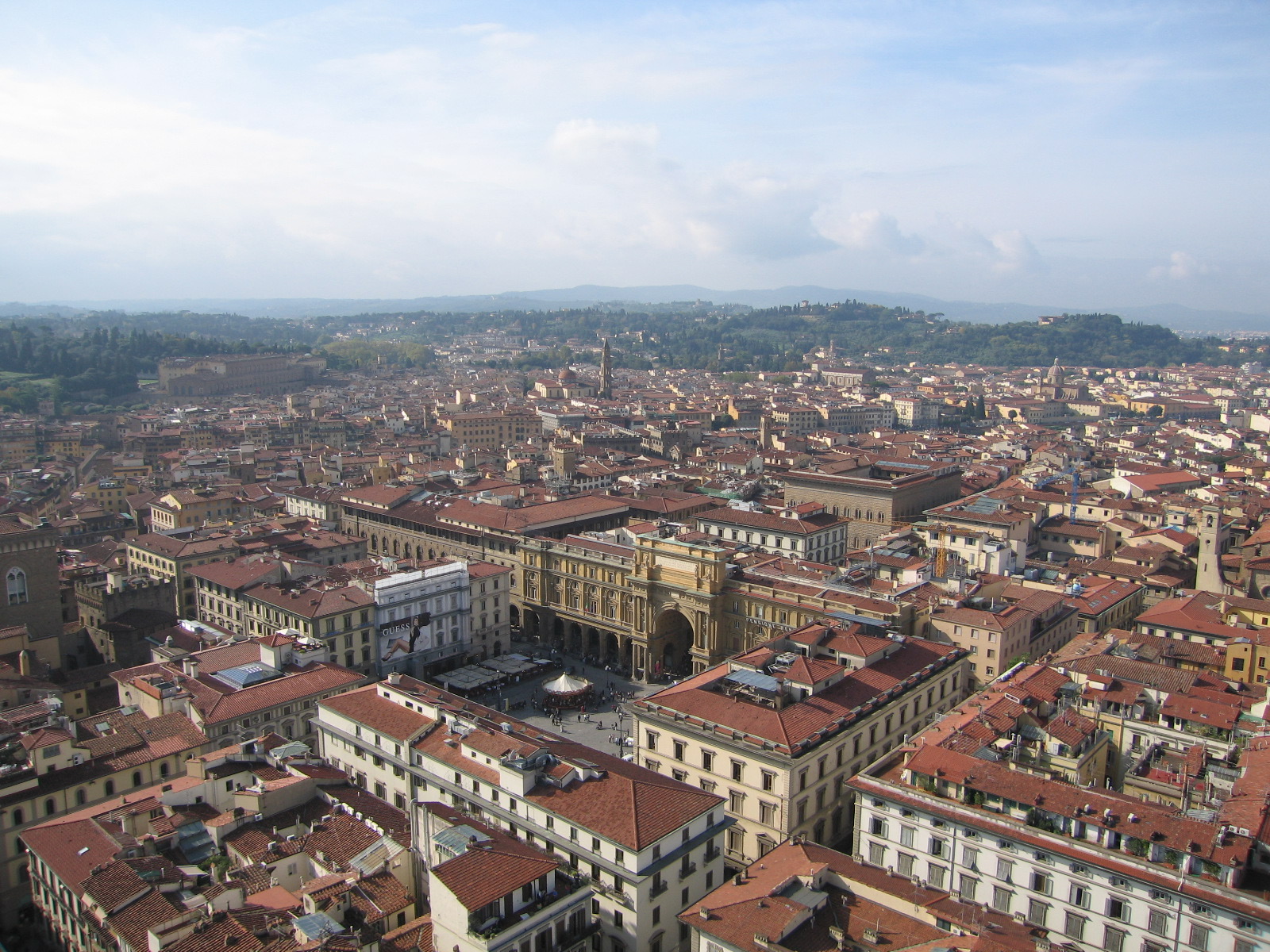
Alan Fisk is a Canadian who lives in the UK. His novel, Cupid and the Silent Goddess, is set in Florence, Italy, during the mid-1500s. The book was first published in 2003 and came out again in 2022. Its presentation of Florence in the 1500s is one of the strengths of this book, as Fisk goes into fascinating detail about the world of art and the world of power in that famous Italian city. The text is very smooth and readable.
The story is told from the first-person point of view of Giuseppe, a 17-year-old apprentice for a well-known artist in Florence. The novel combines fiction and non-fiction elements. Giuseppe is a fictional character but the artist he is working for, Agnolo Bronzino, was a real-life artist in Florence who lived from 1503 to 1572, and the work of art that is the main focus of the novel was an actual Mannerist painting that he executed in 1545, titled “An Allegory with Venus and Cupid.” The painting is now in the collection of the National Gallery in London, England. A reproduction of the painting appears at the beginning of the book, and this is quite helpful for the reader to picture the various elements of the story.
The painting is commissioned from the artist by the ruler of Florence, Duke Cosimo de Medici, to be given as a gift to King Francis I of France. The painting itself depicts the goddess of love, Venus, as well as Cupid, and several other lesser characters. Both Venus and Cupid are depicted entirely nude so the painting has serious erotic content.
Giuseppe, who has been working as Bronzino’s apprentice for several years and lives in a Florentine townhouse with him, is quite unhappy with his own difficult work. He is required to spend much time grinding powders, applying layers of gesso to the painter’s canvases, and doing many other tedious and boring tasks. Moreover, he is occasionally sexually attacked and roughly sodomized by the artist he works for. He hates his situation but has not yet fled from the house.
When the Duke orders the painting to include the images of Venus and Cupid, Bronzino and Giuseppe tour Florence trying to find a sufficiently attractive woman to paint as the goddess. At one point, Giuseppe notices a beautiful woman standing at a window on the upper floor of a convent. Bronzino meets with the head of the convent and forces her to send the woman in the window to his studio to pose for the painting. Meanwhile, he has decided to use a naked Giuseppe as the model for Cupid.
It turns out that the woman, Angelina, is unable to speak at all but is willing to pose in the nude for the painting. Although Bronzino finds, as he works on the painting, that the woman is a perfect model for Venus, he doesn’t treat her kindly. Giuseppe feels badly for this vulnerable, mute woman and he falls in love with her. She also develops feelings for him.
Other less-explicit figures in the painting represent deceit, folly, oblivion, and Father Time. These figures are not important to the plot. Another character in the novel itself is Pontormo, an older artist for whom Bronzino was the apprentice in his youth. Pontormo and Bronzino have an ongoing homosexual relationship.
As the painting is almost finished, Giuseppe and Angelina decide to flee the city and abandon Bronzino for good. I will avoid revealing the details of how the book concludes so as not to give away the result of their flight from Florence.
Altogether, the novel is an excellent, free-flowing read with a view into the artistic world of Florence that is fascinating in its detail. A good read.

Alan Fisk is the author of The Strange Things of the World (1988), The Summer Stars (1992), Forty Testoons (1999) and Lord of Silver (2000). A member of the Historical Novel Society, he has lectured on subjects including ‘Writing Historical Novels’ and ‘Story Theory’.
Born in Singapore, Fisk moved to Newfoundland in 1972 (setting for Forty Testoons), lived 12 years in Montreal, served in the Air Force, and since 1989, has lived in the UK. He is at work on another historical novel.

Photo: Vincenzo Pietropaolo
Of Mark Frutkin’s 19 published books, nine of his ten novels are set in Italy, Spain, Paris, France, China, and Tibet. His connection with Italy began in his third year of university, at a North American campus in Rome; research for his five novels set in Italy took him to Venice, Milan, Bologna, Cremona, and again Rome. Two of his five works of non-fiction are set abroad: Walking Backwards, a series of essays about his travel experiences from Istanbul to Paris; and Where Angels Come to Earth (An Evocation of the Italian Piazza), which includes 110 photos by Toronto photographer Vincenzo Pietropaolo.
Frutkin has also published four collections of poetry. His novel Fabrizio’s Return won the 2007 Trillium Prize for Best Book in Ontario and the Sunburst Award. His novel Atmospheres Apollinaire was short-listed for the 1988 Governor General’s Award for Fiction.
Further
- Alan Fisk‘s website.
- Page D’Or.
- “An Allegory with Venus and Cupid,” The National Gallery.
- Mark Frutkin‘s website. For the five novels set in Italy: Venice (The Lion of Venice and The Rising Tide), Milan, and Rome (The Artist and the Assassin, about the life of the artist, Caravaggio), Bologna (The Growing Dawn, about Marconi, Bologna being his birthplace), and Cremona (a lovely small city in the north, on the Po River, where Fabrizio’s Return is set.)