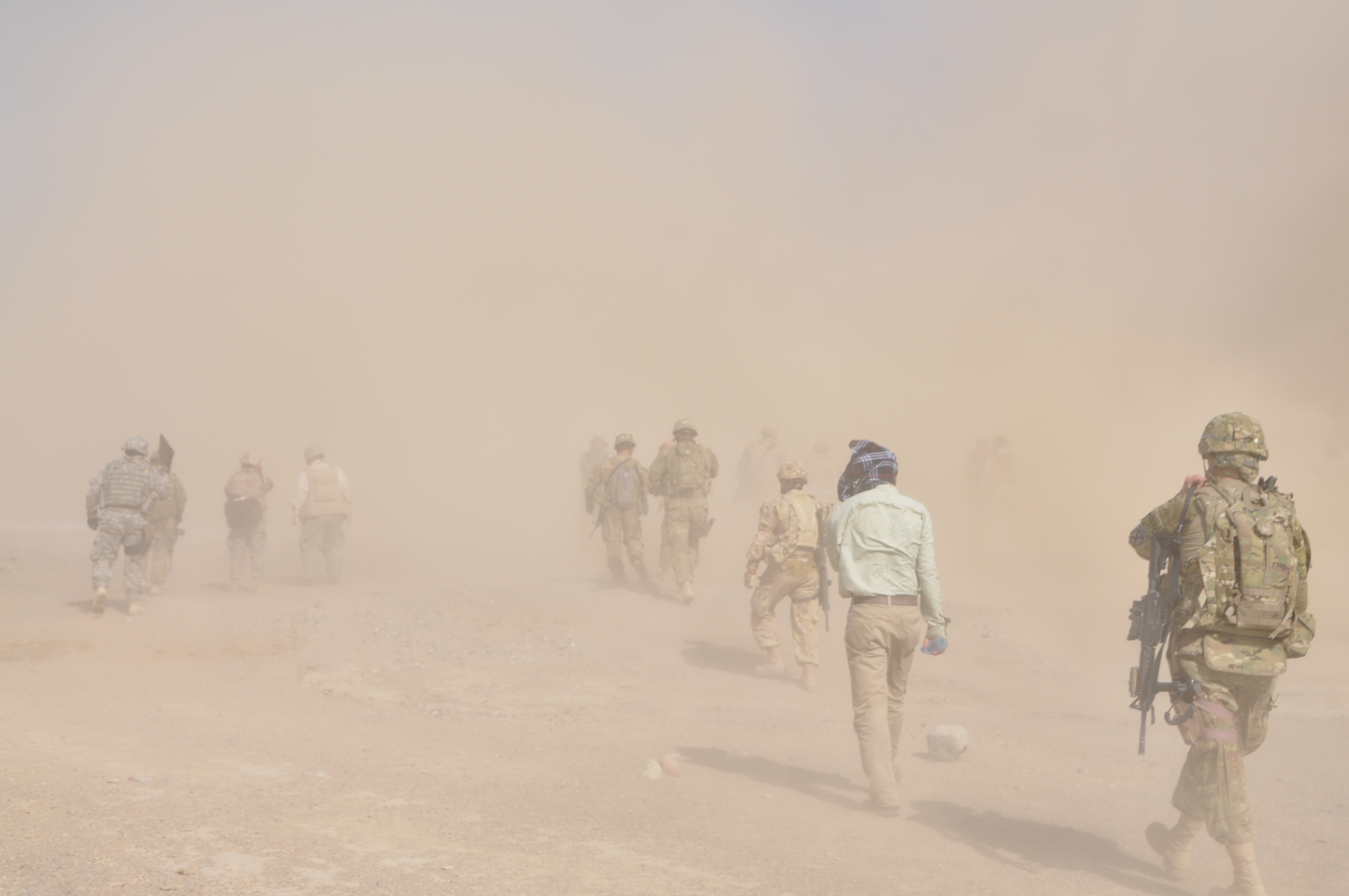

Afghan men sat on carpets and women sheltered indoors… Chairs were set in the dirt for foreigners. The dusty desert, the toiling peasants in traditional dress and the earthen buildings gave an old testament feel to the place.
Unwinnable Peace: Untold Stories of Canada’s Mission in Afghanistan by Tim Martin (Tidewater Press, June 2024, 226 pages).
Reviewed by Roberta Walker
Tim Martin is back with his second book and, once again, the veteran Canadian diplomat turned author takes us on a fast-paced ride into the heart of a collapsing state where few of us will ever go. This time it is set in Afghanistan, and while Unwinnable Peace reads like a thriller novel, it is non-fiction and totally autobiographical. Martin is the narrator, and he spins his stories around a series of in-your-face encounters with intriguing characters, and terrifying situations that make the back of your neck prickle. His gritty narrative emerges from his posting to Afghanistan in 2010, when he was assigned to be Canada’s last representative in the troubled province of Kandahar. It was a place already known around the world as the stronghold of the Taliban and the key battleground in the US led war on terror. It was his most life-changing assignment in a 30-year diplomatic career.
The book is based on 25 interviews with people Martin met on the job. They range from Afghan Generals, to counterinsurgency specialists, warlords, state governors, aid workers, Afghan interpreters, and Canadian women who worked as civilians. All men and women who, ten years after deployment, are still struggling to come to terms with their haunting experiences, shattered emotions, personal sacrifices and the eventual Taliban victory.
As we ride on Tim’s shoulder through the pages of this book, he takes us behind the walls and into the offices, the homes, neighbourhoods, and family compounds, and inside the minds of those who populate the war zone and countryside. “The Kandahar Airfield (KAF) blows you away; it could have been a set for Star Wars…. .a labryrinth city of plywood, shipping containers and tents, KAF housed … twenty-six thousand military personnel from 60 nations.” It sounds like a secured military fortress until Martin drops in another fact a few pages later: “In 2010, a Taliban rocket hit KAF every 3 days on average.”
He is a natural storyteller. His writing is subtle and his descriptions are so meticulously crafted that characters leap off the page. In addition, he infuses the book with a rising sense of tension and fear, using his talent for painting with words, selecting details to create a landscape of violence and danger surrounding daily life. From his intimate vantage point, he lets us inside his head and gives us a sense of how it feels to be there.
People in war zones develop a sixth sense about violent conflict, latent or imminent. It could be the tension transmitted by others around us…the pheromones we pick up from others feeling the same thing…..For me, the air tastes acidic…
He also drops in lines to show the MASH style of humour that inevitably emerges in chronically dangerous war zones, as for example his description of a warlord he visited in the countryside: “This Talib was dressed in clean new clothes, a white salwar kameez with a tidy black turban and black sandals. He had all his limbs and both eyes.”
Nicknames were part of it. One of the interpreters earned the name Rambo, and Tim was dubbed Timmer.
Tim Martin admits up front that Unwinnable Peace was a book he needed to write for his soul and his country. It became a quest for Martin himself to make sense of Canada’s mission to bring security and help democratic government take root in the province of Kandahar. He also wanted to shine a light on individual faces in an effort to humanize Canada’s longest participation in a war, and to make Canadians understand, remember and honour those who served to support their allies and fight for Canadian values. While the battle against the Taliban may have been lost, Tim Martin can claim victory for the hearts and minds of his readers with this memorable book, Unwinnable Peace.

Tim Martin, a career diplomat, has led in geopolitical crises from Somalia to Kandahar. He was the foreign policy officer for the Horn of Africa during Canada’s Somalia mission and saw the crisis unfold in both Mogadishu and Ottawa. When Canada established diplomatic relations with the Palestinian authority, Martin went to Ramallah to open and head up Canada’s Representative Office to the West Bank and Gaza for three years. In Nairobi he tracked the pillaging of Congo resources in the aftermath of the Rwanda genocide and went on to be Chairman of the Kimberley Process to ban blood diamonds. Martin has served as ambassador to Colombia and Argentina, and was the last Representative of Canada in Kandahar, Afghanistan (RoCK). He has been awarded three medals by Canada’s Governor General; the Commemorative medal of the 125th Anniversary of Confederation; the Queen’s Jubilee Medal, the Operational Service Medal and the King Charles III Coronation Medal.
Now dedicated to writing, Unwinnable Peace follows his debut political thriller, Moral Hazards (2020).
A former writer and broadcaster, Roberta Walker is a relentless traveller, living in Chelsea, Quebec. When she’s not on the road, Roberta chases her passion for music. She runs a music series at an old church she’s helped turn into an arts centre.
(photo: Sandy Foote)

Further
- Tim Martin’s website, Diplomatic Counsel and his website for Moral Hazards.
- Tim Martin’s publisher’s website, Tidewater Press.
- Matthew Behrens reviews Unwinnable Peace for Quill and Quire.
- Tim Martin on YouTube, October 2024.
- Roberta Walker’s “Think About It,” series at CBC.
- Robert Walker’s review of Moral Hazards.