
The Trial of Katterfelto by Michael Redhill. Knopf Canada, 2025.
Reviewed by Barbara Sibbald.
I’m going to have to eat my words. After reading Bellevue Square by Michael Redhill, I slammed it in my Goodreads feed and concluded by saying I wouldn’t read subsequent books in his triptych entitled “Modern Ghosts.” But after attending Redhill’s reading and interview at the Ottawa International Literary Festival, I found myself intrigued by the strange plot and historical setting of The Trial of Katterfelto, and, since I didn’t know initially that it was the second work in his triptych, agreed to this review. I’m glad I did because this is an inventive and compelling novel.
If I had to place it in a genre, I would cross epistolary historical fiction (last quarter of the 1700s) with post-apocalyptic science fiction courtesy of technological time travel. Somehow, magically one might say, it works.
In part this is because some of the historical characters are based on actual people, most pointedly Gustavus Katterfelto, who was indeed a roadside magician (sometimes credited with inventing germ theory) and Samuel Taylor Coleridge.
The book’s narrator and letter writer is Roger Gossage, a 33-year-old Moroccan Jew who is pilfering his way through England when he meets Katterfelto, a travelling magician and “natural philosopher.” Katterfelto takes Gossage on as an assistant, though they barely eke out a living. Katterfelto is a split character: scientist and magician. At performances he uses a microscope to show “twirling little worms and bugs” in water then uses tricks to seemingly reattach a cat’s tail.
When Katterfelto and Gossage meet Coleridge, he recites his unpublished poem “The Rime of the Ancient Mariner.” The poet is impressed when Katterfelto is able to recite it back from memory. In Gossage’s opinion, “The magician misdirects attention while the poet focusses it, but there is much similarity in their arts.” They spend a jolly evening together, scarfing their first good meal in months. Coleridge enjoys their company and says they can always contact him through his publisher. Gossage takes him at his word, later sending him the long letter that is the manuscript of this novel, with the hope that Coleridge will try to find a publisher.
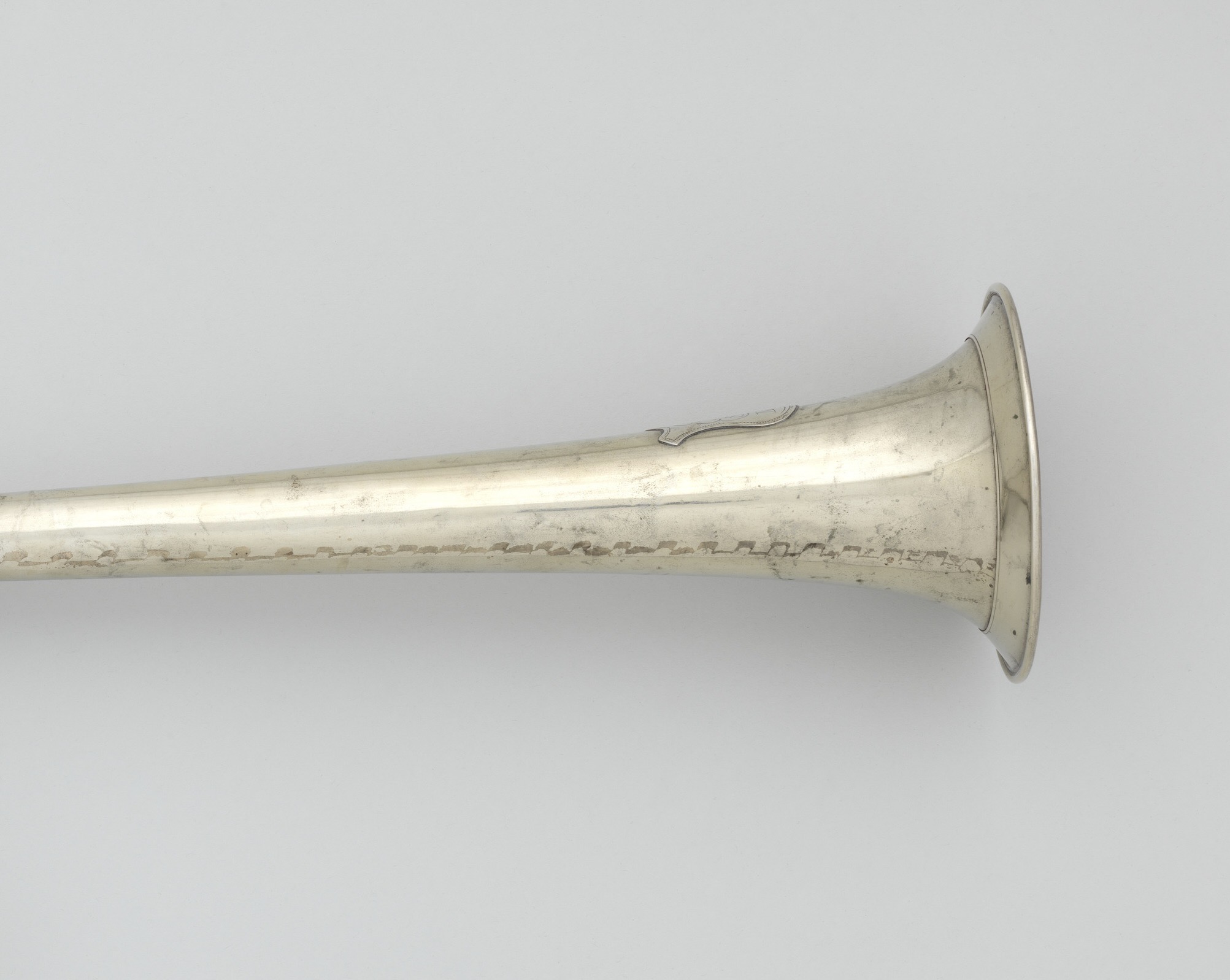
The story truly begins when Katterfelto cuts his foot on a silver disc while bathing in a river. Gossage hammers and repairs the disc into a horn shape that Katterfelto subsequently tries to use to amplify his voice during a performance. Instead, the “horn” emits a cacophonous roar of static, then a woman’s voice emerges; she speaks English, but in an accent Gossage has never heard. She calls herself Siri and speaks in fragmented sentences of a place called Toronto where there are dead children, a massive flood and a lake that’s frozen eight months of the year, viruses and “sporing and dying workers” as well as her 22-year-old son who suffers epilepsy. I know! The horn-trope is unbelievable — How is it powered? How did it survive underwater? — and yet, with the abundance of detail and the set-up, I willingly suspended my disbelief. I needed to find out what would happen. Like me, Katterfelto’s audiences are captivated by the magic horn’s cautionary tale of climate change and rampant pharmacopeia; large crowds begin to attend their shows and a cultish religious offshoot evolves wherein Siri’s words are the gospel.
Katterfelto claims the horn’s voice is magic, but Gossage soon discovers this is a lie when he secretly takes and listens to the horn. He transcribes Siri’s tale and believes her plea is earnest: she needs help for her son and furthermore, this dystopian world might, with their help, be prevented. Gossage confronts Katterfelto, shows him his transcript, and convinces him that they must help. They decide to seek advice from the best scientific minds of the day. They advertise, interview and select a scientific committee of four including a physician and natural philosopher, a lady astronomer, a black expert in metallurgy and a left-leaning (relatively) politician. They meet in secret and attempt to communicate with the horn but their efforts are thwarted when Katterfelto is arrested for “purporting to sorcery.” Gossage escapes, vowing to help Siri.
I would be remiss if I didn’t praise the writing, which is frequently very fine: “There are lies and there are secrets. A secret preserves a mystery. Lies are to get something.”
“The audiences in our first few weeks were appropriately impressed, but already I could feel the Doctor fading, as if he were breath in a mirror.” This latter quotation and Siri’s disembodied voice places the book firmly within the “Ghost” triptych.
The characters are also finely portrayed. Gossage is a thief and trickster, but he grows sincere and caring, and I came to like him very much. Katterfelto is a rascal and consummate liar, but also exceptionally intelligent and inventive. The Trial of Katterfelto is a rollicking tale with fascinating magical tricks, rivals, and beatings, but at the same time it affords intimate domestic insights into the relationship between the two friends and colleagues. Their relationship with one another and with Siri is at the heart of the story.

photo: Amanda Withers
Michael Redhill’s novel, Bellevue Square (Doubleday, 2017) won the 2017 Giller Prize. Consolation (Doubleday, 2006) won the City of Toronto Book Award in 2007. Martin Sloane (Doubleday, 2001), was the winner of the Books in Canada First Novel Award, and the 2002 Commonwealth Writers Prize (Canadian-Caribbean Region). Saving Houdini, his novel for youths, mentions Katterfelto. He has also written six collections of poetry, and four plays, including the autobiographical Goodness. His series of crime novels is under the name Inger Ash Wolfe; The Calling was made into a movie with Susan Sarandon and Donald Sutherland.
He studied for one year at Indiana University, and then returned to complete his education at York University and the University of Toronto. He lived in France between 2007 and 2009. He visited, but did not live in, the UK while writing Katterfelto. He lives in Toronto, Ontario.

photo: Curtis Perry
Barbara Sibbald is an Ottawa poet and an award-winning author of five books of fiction, the most recent of which is her historical novel, Almost English (Bayeux Arts, 2025).
Further
- The Yorkshire Post offers an explanation of why Christian William Anthony Katterfelto was buried under the floor, near the altar, of St Gregory’s church in Bedale in 1799: “From Romans and Vikings to conjurers and film stars — Bedale has quite a story to tell,” by Phil Penfold (21 June 2020).
- Review of David Paton-Williams, Katterfelto: Prince of Puff (Matador, 2008) in Romanticism, Edinburgh University Press Journals, by Paul Chesire.
- Michael Redhill at Penguin Random House Canada.
- Michael Redhill at Coach House Books (and some startling parallels between Katterfelto and Goodness).
- Inger Ash Wolfe at Penguin Random House Canada.
- Review of Redhill’s Saving Houdini (HarperCollins Canada, HarperTrophy edition, 2015) in the Montreal Gazette (July 12, 2014).
- “Harry Houdini and Arthur Conan Doyle: a friendship split by spiritualism,” by Lyn Gardner, the Guardian (August 10, 2015).
- Barbara Sibbald’s books.
- Barbara Sibbald previously in Canadian Writers Abroad.


Header photo: Over-the-Shoulder_Soprano_Horn_in_E-flat_MET_DP-12679-053 Metropolitan Museum of Art, CC0, via Wikimedia Commons.


2 responses to “Siri Blows Her Horn”
Interesting and fine review. My head is a-whirl with all those plot elements. But I’m also intrigued.
This book sounds amazing. Thanks for the superb review, Barbara.