Frances Boyle reviews Menaka Raman-Wilm’s The Rooftop Garden, Nightwood Editions, 2022.

The Rooftop Garden is centred around a friendship, though an unequal one, between Nabila and Matthew, who spend time together after school for several months, and who meet again later in life. The story is set mainly in two times and two different cities: the Toronto of Nabila and Matthew’s childhood where the titular rooftop garden sits atop the apartment building where Nabila lives with her family, and contemporary Berlin, where Nabila has come in search of Matthew who has gone missing.
The chapters largely alternate between these two settings. There are also alternating sections where Nabila and Matthew’s meetings as adults are presented from their respective points of view, and ones where Matthew is introduced to and gradually indoctrinated into a shadowy incel-like group, which turns out to be even more sinister than it first appears.
At ten, Nabila is confident and precocious, a scientist’s child. Matthew is from a less-privileged family and struggles in school. They spend afternoons together when Nabila’s caregiver, realizing that Matthew would otherwise be on his own, brings him from school to play with Nabila. Nabila is initially dubious until she decides that “Matthew turned out to be okay” (p. 15). She enlists him in games that posit climate disasters which have left them as “the last people on earth,” (p. 7) with the rooftop garden being an isolated island in a sea that has overwhelmed the city. Matthew is placid and willing to be ordered around by Nabila, though occasionally surprises her with good suggestions for their game.
This imbalance in their relationship is carried forward to their encounter as adults, when Nabila is a scientist studying seaweed, while Matthew is working at a fast-food joint. He gravitates to her, but she remains ambivalent about befriending him again. His intensity makes her uneasy, so she is unencouraging and somewhat dismissive. Matthew travels to Germany for what AJ, his recruiter in the men’s group, assures him will be the next step on his journey, and his emails to Nabila soon become desperate. Prompted both by worry and a sense of guilt at rebuffing him, Nabilla travels to Berlin to try and extricate him from what has become a dangerous situation.
Matthew is portrayed as naïve and overly trusting: in the childhood game with Nabila, later in a high school party scene when Nabila rescues him after a bullying incident, and in his willingness to be persuaded of the group’s misogynistic and anti-establishment ideas. But we see that Nabila also may be somewhat gullible, as Nabila allows Tierney, her American host in Berlin, to lead her into risky undertakings around the city.
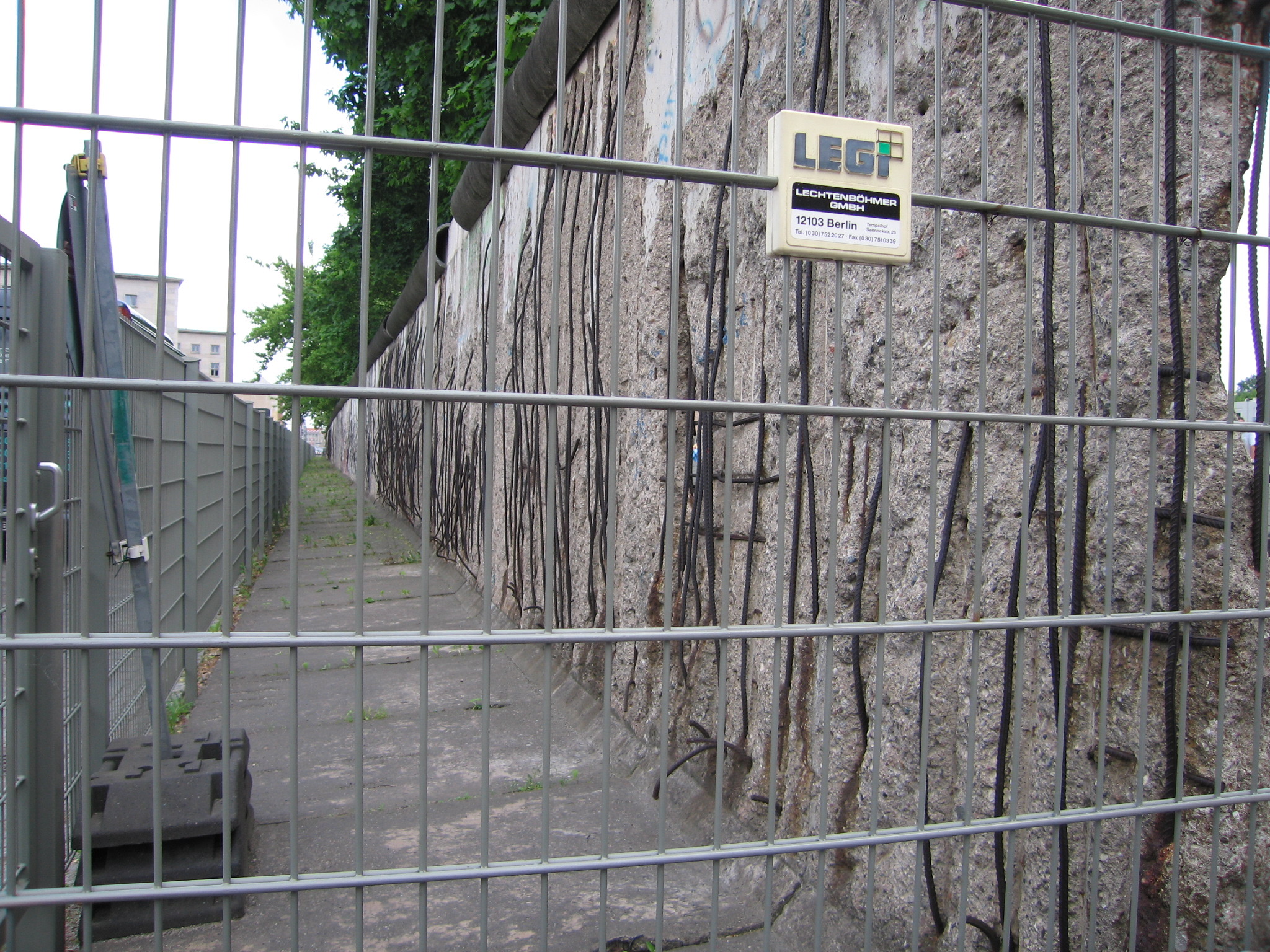
Raman-Wilms paints vivid pictures of both the tourist sites and “the other side” of Berlin in these adventures as well as in Nabila’s solo perambulations. A fairy tale forest in an overgrown amusement park that Nabila says is “like something she’d dreamed up as a kid”, nightclubs and cafés, the banks of the River Spree, bridges over railway tracks, and another forested area where squatters are encamped all contribute to the sense of place, and to Nabila’s feeling that it is all “strangely magical to her, like her childhood games had actually been rooted in reality” (p. 40).
A large part of what creates this sense of magic in the book is the tree imagery threaded effectively throughout, including movingly in the epilogue. In the childhood game, the rooftop is a forest, where the trees root themselves down the sides of the building. In Berlin, trees grow through rubble and train tracks, and the bookstore-café where Nabila stays is built around a “war tree” that couldn’t be cut down because it had survived the two world wars. A major operation is required for city crews to remove tree roots that have infiltrated water lines. Matthew “feels like he should say sorry to the tree” that was used for target practice (p. 87), and Nabila considers scientific theories that trees talk to each other through their roots, and wonders if trees can sense danger.
Tension builds throughout the book, and is especially palpable in the final chapters leading to a dramatic conclusion. I would have like to have known more about the motives of the group Matthew joins, but it is perhaps fitting that these remain as obscure to the reader as they do to Matthew even when he is in the midst of it. His overriding motive remains to protect Nabila.
Longlisted for the 2022 Giller Prize and a finalist for the Guernica Prize, The Rooftop Garden is a compelling read, bringing the pacing of a thriller to a literary exploration of friendship, loyalty and what responsibility we bear to those who have played a part in our past.

photo: Fred Lum
Menaka Raman-Wilms is a Toronto writer and journalist. She’s the host of The Decibel, the daily news podcast from The Globe and Mail. Previously, she was a parliamentary reporter for The Globe and Mail and an associate producer at CBC Radio One. She has a BA and an MA in Creative Writing from the University of Toronto. While studying at Carleton University for a Master’s in Journalism, she interned for the CBC in London and then lived in Berlin for six months. She’s also a classically trained singer. For several years, Menaka reviewed for the Ottawa Review of Books. She received early recognition for her fiction: given the Alice Munro Storytelling Award for youth in 2016, and winner of Room Magazine’s 2012 fiction contest. In 2019, Menaka’s story “Black Coffee” was shortlisted for the CBC Short Story Prize. The Rooftop Garden was longlisted for the Giller Prize in 2023.

Frances Boyle is the author of Skin Hunger, a novel (Guernica Editions, forthcoming 2026), Seeking Shade, a short story collection that was a finalist for the Danuta Gleed Award (The Porcupine’s Quill, 2020) and Tower, a Rapunzel-infused novella (Fish Gotta Swim Editions, 2018). Her poetry collections are Light-carved Passages (BuschekBooks 2014; Doubleback Books 2024), Openwork and Limestone (Frontenac House 2022) and This White Nest (Quattro Books 2019). Raised in Saskatchewan, Frances has long made her home in Ottawa.