Sea of Tranquility by Emily St. John Mandel (HarperCollins Perennial),
Reviewed by Debra Martens
The rules for the novel game have changed. Consistent point of view? Out. Chronology with increasingly rare flashbacks? Out. A main character with a couple of sidekicks? Out. Contemporary fiction is egalitarian, giving voice to many characters. As for chronology, well, an author could put all in a huge hourglass and shake vigorously and then break the hourglass like a piñata so that the scenes tumble out in random order. Fragmented time that is closer, in fact, to how memory works, and therefore, closer to reality than the fiction that I grew up on.

These are wild generalizations in need of support. What have I been reading lately? Ali Smith, Autumn and Jenni Fagan, Hex, are two that come to mind for their switches between narrators and time. What really got me thinking about the changes to the novel are the three most recent ones by Emily St. John Mandel, novels that I didn’t think I’d enjoy, not being a fan of speculative fiction, but novels that I did enjoy very much.
An island in British Columbia, Toronto and New York, mid-Western States, Malaysia, the Moon and further into Space, these are some of the places that make up the many worlds of the six novels of B.C.-born and raised Emily St. John Mandel. From dance school in Toronto, to writing in Montreal, she made her way to New York, where she has lived for the past twenty years. Her home is now in Brooklyn and Los Angeles, but her eyes are on the world, from its smallest detail to its place in the universe.

Sea of Tranquility (HarperCollins 2022; rpt. Harper Perennial 2023), Mandel’s most recent novel, posits multiple universes, or a multiverse, and is set not only on earth but also in space. We begin in 1912, which seems at first glance to be an overly familiar colonial story about a remittance man come to Canada. There’s a switch in section 4 to the dinner party that caused Edwin St. John St. Andrew to be evicted from his family nest in England. And then in sections 7 and 8 things take a weird turn, and Edwin glimpses another world while in a forest in Caiette on Vancouver Island. He also meets one Roberts, who purports to be a priest, but who is not. Then we switch to “Mirella and Vincent in 2020”. In The Glass Hotel, Mirella and Vincent are friends, but their friendship ends with the collapse of Jonathan Alkaitis’s Ponzi scheme (Vincent is Jonathan’s live-in girlfriend, and Mirella’s husband invested…) As well, Vincent drowned in 2018 in that novel. She is present, in 2020, because her composer brother, Paul, has stolen her five-minute videos to accompany his music, and while he continues to lie about the source of the videos (in The Glass Hotel he claimed they were his own; here he claims that he found them after her death), at least he acknowledges that she was the creator. The video that he shows is of the same scene that Edwin saw in the tree in the forest. Mirella has come to the show to find out what happened to Vincent. Also there is a man called Gaspery Roberts, who wants to talk about the video. Mirella is frightened by Roberts because she remembers seeing him when she was a child, under an Ohio bridge with a gun in his hand, which we learn more about in section 2.
Vincent imagines a world “…where the terrifying new swine flu in the Republic of Georgia hadn’t been swiftly contained; an alternate world where the Georgia flu blossomed into an unstoppable pandemic and civilization collapsed.”
–Emily St. John Mandel, The Glass Hotel
In Sea of Tranquility, Gaspery Roberts carves a phrase into a prison wall: No star burns forever [sic bold font]. His cellmate Hazelton asks about it, and then Roberts leaves prison via the prison hospital; in two books previously, in Glass, in 2009, Jonathan Alkaitis reads the phrase, is irritated by it (he’d rather dream his counterlifes). His cellmate Hazelton explains that it was Roberts, the guy here before him. Here, too, lest there be any doubt, we learn that Roberts was sixty and went to hospital for a heart thing (II, 6, p. 137). Did Mandel decide to give Glass Roberts a backstory when she was writing Sea, or did she know when writing Glass that Roberts was a time-traveller? Either way, he is the character who carries the heavy issues in Sea: should one fuck up one’s life (or timeline) in order to save the life of another (interfere with their timeline)?

Then, in section 3, “Last Book Tour on Earth,” we jump ahead to 2203. Here we meet author Olive Llewellyn, on a book tour to promote her book Marienbad on earth from her moon home, Colony Two. She refers to her grandmother, a first moon settler, at the Vancouver Airship Terminal, which turns up repeatedly.
Characters cross from one book to another: Vincent is a major character in The Glass Hotel and and a minor character in Sea of Tranquility, for example. Vincent and Paul grew up in Caiette, the location of the tree with the temporal glitch. The actor who dies at the beginning of Station 11 meets one of his wives in Caiette. Paul’s video-music show is at the Brooklyn Academy of Music in both The Glass Hotel and Sea of Tranquility. There’s even a crossover tattoo. The overall continuity is the pandemic: In Sea, Olive’s novel, Marienbad, is about a pandemic, and includes a prophet who, like the prophet in Station 11, is shot in the head; in Sea, Gaspery Roberts accidentally mentions fomites and Covid-19 before their time; in Glass, Vincent imagines an alternate reality, where the swine flu wasn’t contained, and finally, the pandemic is the plot driver of Station 11.

Mandel’s characters move. In Last Night in Montreal (2009), a young woman moves from city to city (Montreal, the United States) to evade a private detective. In The Glass Hotel, characters leave, and return to, Caiette, B.C., as well as living in New York, and Vincent takes to the sea. In Station 11, everyone wanders through pandemic chaos, from Canada to the U.S. In Sea of Tranquility, author Olive cuts short a book tour because of a pandemic, a time-traveller visits B.C., England and, among other places, space colonies.
Of the three, Station 11 is my favourite, not only for its playful use of letters and interviews, but because the characters felt more present. For example, we meet the main character, Kirsten Raymonde, both as a child actor (pre-pandemiuc) and as an adult actor (post-pandemic) with The Travelling Symphony. While the actor Arthur Leander is not a sympathetic character, his wives are, particularly Miranda, whose life, like Vincent’s, takes astonishing turns. Even the characters who serve as plot devices, Jeevan Chaudhary (journalist and paramedic), or Clark Thompson, Arthurs’s friend and eventually museum curator, or the various members of the troupe, are compelling, and I read on, anxious to see if they reach their journey’s end. I hasten to add that Sea of Tranquility is a fine companion, although I didn’t warm to Gaspery Roberts or Olive Llewellyn as much as to Kirsten and Miranda and Vincent. Perhaps because they don’t need to live by the phrase, “Because survival is insufficient.”
And did you know that gasoline goes stale? Station 11 is now a TV series.
Mandel’s novels are exciting in their abandonment of traditional form. The Glass Hotel, for example, not only gives away the ending at the beginning, it also switches from one character to another, from one time period to another. It pretends to have traditional form by offering us three parts or section, but those parts are broken up in an irregular fashion, sometimes with numbered sections, sometimes with named sections, and mostly with simply short sections that dodge around in time and place. The book is a clever puzzle, and it is up to the reader to fit the puzzle together. Rather than passively consuming the story, the reader is actively engaged in the work of fiction. For both Glass and Sea, the publisher joins in, by choosing to put emphasized phrases in bold rather than italic, and by not numbering the left-side pages. (At least there are quotation marks for dialogue, which are absent in Ali Smith’s Autumn and Jenni Fagan’s Hex.)
In the fictional world of Emily St. John Mandel, you won’t find a middle-aged woman (mothers are notably absent, except for Olive in Sea) sedately wondering if she should get more involved in the fight against climate change. The end of civilization is presented through an egalitarian range of characters and occupations: architects, psychics, shipping magnates, tree planters, scientists, hotel security guys, bartenders, cooks, Ponzi schemers, artists, writers, actors and musicians. What concerns them, as they walk, drive, sail, and fly, is very zeitgeisty: alternate or multiple realities, plagiarized art, moral integrity, corruption, infatuation, what makes us human.
Speculative fiction, science fiction, futuristic fiction? I propose a new genre: puzzle fiction. Short chapters or sections, different points of view, different time periods and places… Put the pieces together to understand the chronology, and as you find the connections between books, your rewards will build into a multiverse. But don’t wait for it to happen.
- Emily St. John Mandel’s site.
- In particular, read her essay about her book tour: “The Year of Numbered Rooms,” in Humanities, (Spring 2016, Volume 37, Number 2).
- Katy Waldman provides more about Mandel’s life, and makes other links between the novels, in “The Rewriting of Emily St. John Mandel,” The New Yorker (April 1, 2022).
- May 7, 2020 profile of Mandel, Sixtysix Magazine.
- Robin Levinson-King on Mandel’s divorce difficulty, BBC 2022.
- Mark Sampson’s review of The Glass Hotel.
- HarperCollins Canada‘s order page also provides excerpts for Sea of Tranquility, Station 11 (Harper Avenue 2014) and The Glass Hotel (2020); at Penguin Random House you can listen to a sample of Station 11 (2014), which also published paperback reprints (2015) of Last Night in Montreal, The Singer’s Gun, and The Lola Quartet.
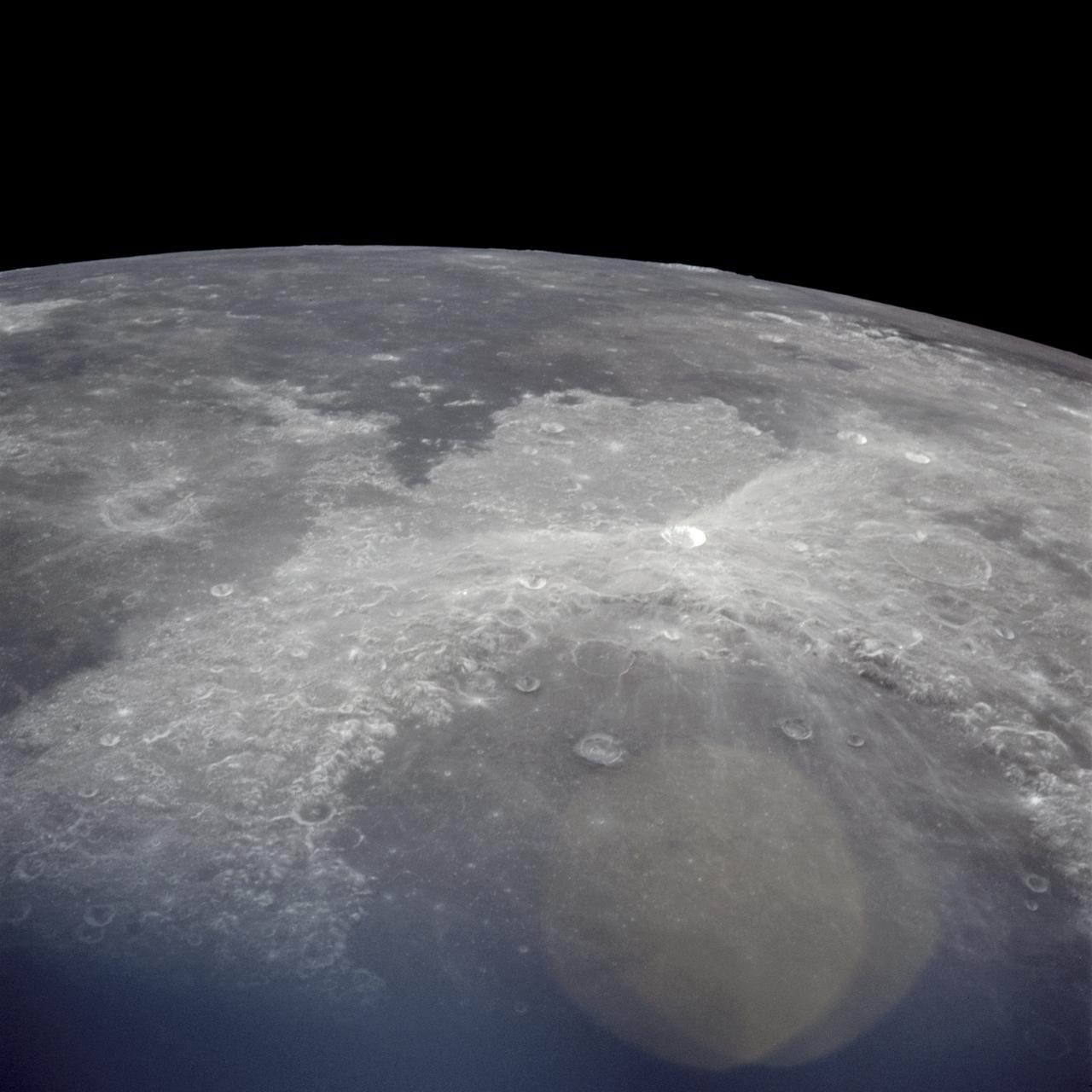
- Moon earth photo: NASA Images images-assets.nasa.gov/image/as11-44-6552/as11-44-6552~orig.jpg
- header photo: Lunar Sea of Crises and Sea of Tranquility, NASA Images; images-assets.nasa.gov/image/as16-121-19438/as16-121-19438~orig.jpg




One response to “Mandel’s Multibook”
WOW, thank you for your amazing creativity and clarity in this spectacular review! CONGRATULATIONS!!!
Marilyn