Review of Sailing to the Heart of Japan: A cruising adventure and how-to guide (Seaworthy Publications, 2024) by Nicholas Coghlan.
Reviewed by Barbara Sibbald

In preparation for my long-anticipated visit to Japan this fall, I’ve been devouring novels, garden guides, histories and now, a book about sailing “to the heart of Japan.” Over 15 months, Nicholas Coghlan, and his partner and crew Jenny, sailed from the remote and depopulated archipelago of Goto Retto in the East China Sea, through Kanmon Kaikyo narrows and into the Inland Sea, from Kagoshima to Tokyo Bay.
Coghlan is a seasoned long-distance cruiser — and Canadian diplomat — who harboured an abiding curiosity about Japan after learning that his father, who fought in Italy and Greece during World War II, dreaded being sent to the Japanese front. That never happened, but his disclosure resonated with Coghlan and prompted his voyage on the 27-foot Bosun Bird, in part to seek out reminders of World War II. These visits to historic sites are few, albeit interesting, including places like the Chiran Peace Museum.
The book’s main thrust, as the title promises, lies in Coghlan’s discovery of the heart of Japan. And by this he means the genial people. No one could be unimpressed by the generosity of those they encounter: gracious welcomes and guides at many ports, extensive assistance with mechanical problems, gifts galore, food, drink and long evenings in great company. It’s really quite remarkable. Of course, there were a few exceptions, including a nasty encounter with a religious zealot, but for the most part Nicholas and Jenny were warmly received and made many new and helpful friends. I don’t know if this intense comradery is the norm in the sailing world, but I certainly found it remarkable.

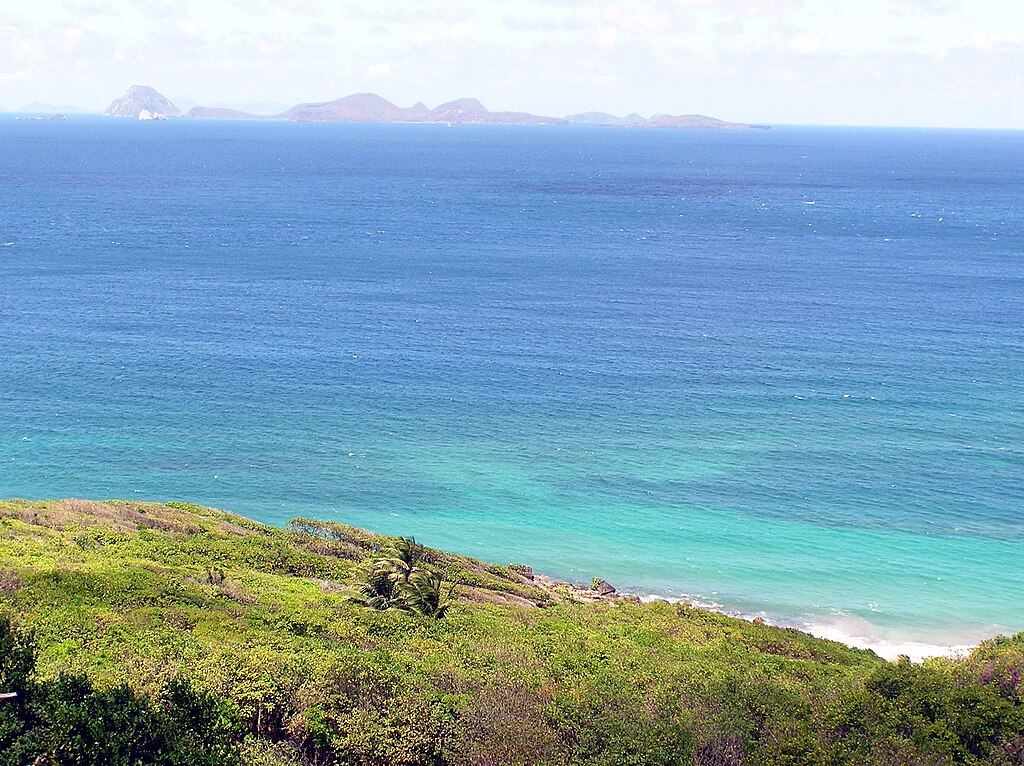
photo: Nick Coghlan
The book opens with their journey from New Zealand, which was not what I expected in a book about sailing to Japan. I found this whole section — 52 pages of it, a quarter of the narrative — was off point and burdened with superficial detail that did not sustain my interest. I was relieved when they finally spotted Japan.
Some of Coughlan’s accounts of their journey and experiences were fascinating, such as those about the depopulation of islands and rural areas due to the aging population, migration of younger people to cities for work and the low population rate in general. On Kabshima Island, for example, the elementary and junior high schools had only one pupil in each although they employed ten teachers and three support staff due to Japanese law which mandates access to school for every child. The island’s two villages have some 150 or 200 people apiece; only two are under 20. This scenario was replayed in various ways across the islands and rural areas. Nozaki Island once had 600 people; no one remains, save a caretaker at a hostel. Other islands have deserted fishing harbours and processing plants. “It was perpetually Sunday afternoon in rural Japan,” writes Coghlan (p 92).
He also alludes to small but revealing things such as every community’s distinctive manhole covers depicting local themes or scenes and indicative, perhaps, of a sense of pride. Jenny has us laughing at her faux pas in an Osen (hot spring bath) when she enters the men’s side. We accompany them through industrial areas, in ports, to shrines and other sites.
It’s all fascinating, but while Coghlan provides ample details in some sections, his travelogue is weak on analysis. There is scant reflection on the meaning of these experiences and the attendant culture, much less how they made the author feel. I longed for more context, history, and perhaps reflection. At times, I felt like I was being regaled with anecdotes at a dinner party: many amusing but none very in-depth. I was left with many questions. He states (and re-states) that Japanese women don’t sail with their husbands, but never delves into why this might be. I also wondered why Japanese people are so genial and welcoming? What is the underlying reason for the frustrating bureaucracy around ports and permits? The tradition of blackening teeth is mentioned, but what’s the story behind it? Why does he think nothing is taught in schools regarding Japan’s military history from 1930 to 1945? And what is the reason for his reticence?

photo: Nicholas Coghlan
I’ve never set sail, so I couldn’t possibly comment on the “how-to” portion of this guide, though the author did make the trip without mishap and has sailed some 70,000 miles offshore, so I have to assume this is accurate. Certainly, the appendix is extensive and includes GPS coordinates for over 60 anchorages/moorings and advice on weather, charting, bureaucratic procedures and more. One thing I found lacking, both in this how-to section and the narrative itself, is an expression of the joy that sailing must surely give to those who do it.
What I did enjoy were the details about the islands and sites, the depopulation of rural areas and most of all, the welcoming and genial Japanese people. This alone made it worthwhile reading.

photo: Nicholas Coghlan
Nicholas Coghlan’s first book on sailing was Winter in Fireland: A Patagonian Sailing Adventure (Univ. of Alberta Press, 2011). A former Canadian diplomat, he has written three books about that time, most notably Collapse of a Country: A Diplomat’s Memoir of South Sudan (McGill-Queen’s Press, 2017), which sadly remains relevant today. Far in the Waste Sudan (MQP 2005) recounts his three years in Sudan, from when he was sent in 2000 to open a mission in Khartoum, to travel into the mountains of Darfur and, of course, sailing on the Blue Nile. His 2004 memoir is about his time in Colombia: The Saddest Country: On Assignment in Colombia (MQP). When not on the Bosun Bird, the Coghlans live on Salt Spring Island.
Further
- You can read more about Nick and Jenny’s sailing trips at Bosun Bird, which also links to Coghlan’s 2018 description of sailing in Japan in Sailing Today.
- “Cruising Patagonia: An extract from Winter in Fireland” by Nicholas Coghlan, in the June 2020 issue of Yachting World.
- Naming the Chiran Peace Museum: the vagaries of translation suggest it could also be called the Chiran Peace Museum for Kamikaze Pilots; and Google translate offers yet another option. There’s another photo on this travel website, which also has a section for Canadians.
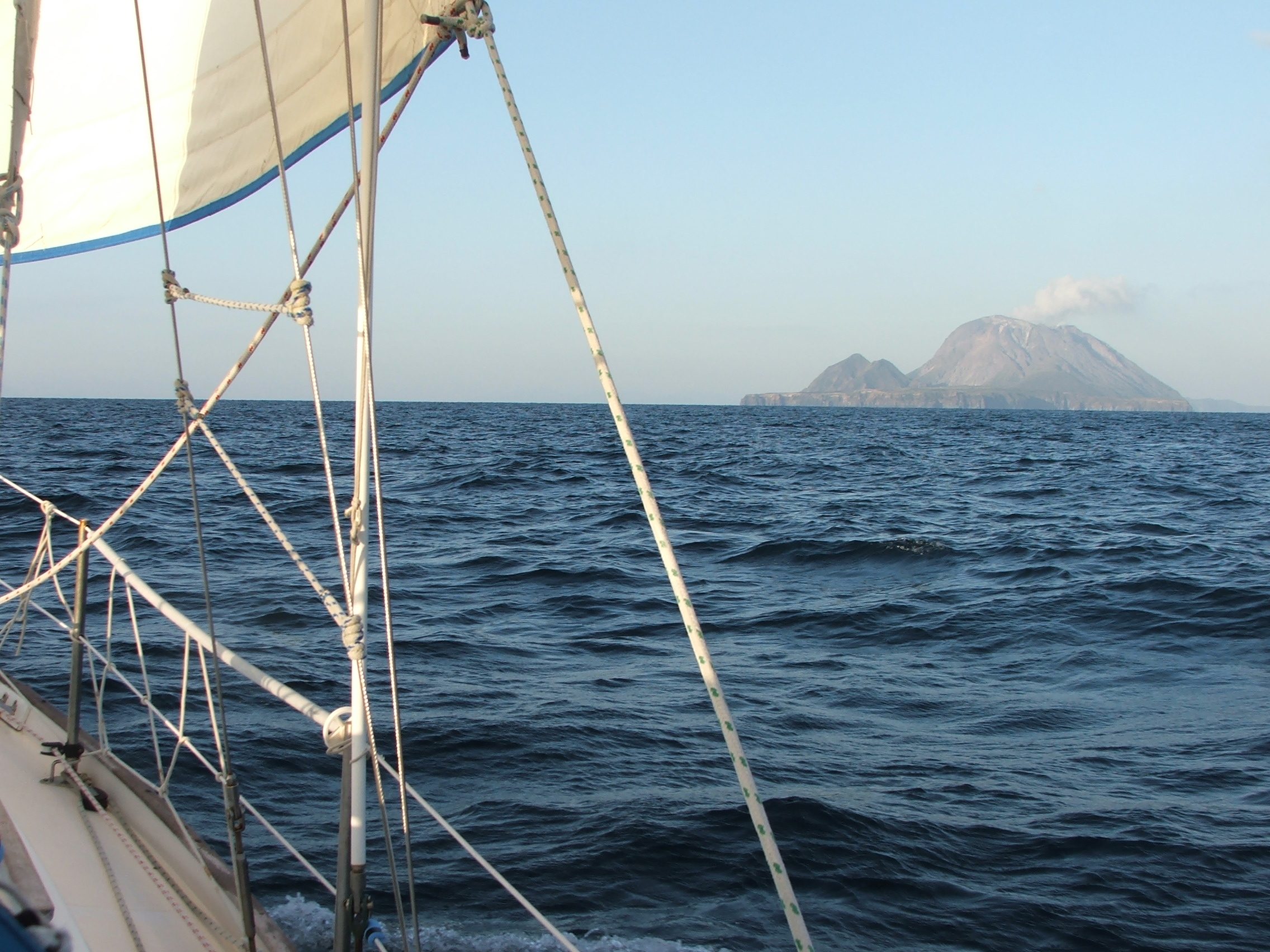
- The header photo, also by Coghlan, is of the Io Shima volcano, off the south coast of Kyushu.

Barbara Sibbald is the author of three novels and a collection of short fiction, The Museum of Possibilities. The latter garnered gold in the Foreword Indies and silver in the eLit Awards. Her novel, Regarding Wanda, was shortlisted for the Ottawa Book Award. Her new novel, Almost English in the Raj, will be published in 2026. She lives in downtown Ottawa.